
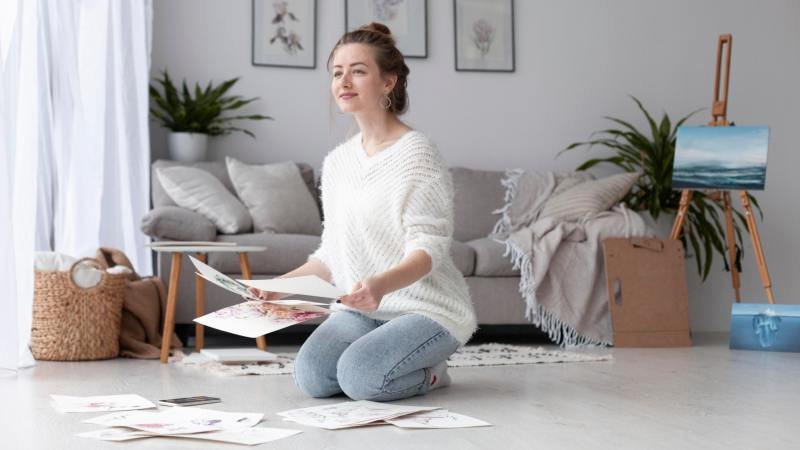
Many homes today feel crowded, noisy, and overwhelming. Clutter builds up fast, and before you notice it, your space no longer feels calm or comfortable. A peaceful, minimalist home environment helps reduce stress, improve focus, and make daily life easier. In this guide, you will learn practical steps to simplify your space, choose meaningful décor, and design a home that supports calm living, including how to thoughtfully print posters online to complement your minimalist style.
What Does a Peaceful, Minimalist Home Environment Really Mean?
A peaceful, minimalist home environment is not about owning nothing. It is about owning what truly matters. It focuses on clarity, functionality, and intentional design.
Minimalism means removing excess and keeping only items that serve a purpose or bring value.
Peaceful design refers to arranging your space in a way that reduces stress and supports mental well-being.
Research from the UCLA Center on Everyday Lives of Families found that cluttered homes can increase stress levels, especially in women. Similarly, the American Psychological Association highlights how organized environments support better mental clarity.
In simple terms, minimalism is not empty. It is intentional.
A peaceful minimalist home usually includes:
- Neutral or soft colour palettes
- Functional furniture with clean lines
- Limited but meaningful décor
- Organised storage solutions
- Natural light and open space
When you focus on simplicity, you create room for calm.
Key Takeaway: A peaceful, minimalist home removes excess and keeps only what adds function, meaning, or calm to your space.
Step 1: Declutter With Purpose, Not Pressure
Decluttering is the foundation of minimalism. However, it should not feel extreme or stressful.
Start small. Choose one area such as a drawer, a shelf, or a corner. Ask yourself:
- Do I use this regularly?
- Does this item serve a clear purpose?
- Does it add value to my daily life?
If the answer is no, consider donating, recycling, or storing it elsewhere.
Use the 3-Box Method
Label three boxes:
- Keep
- Donate
- Remove
This simple system keeps decisions clear and prevents second-guessing.
Focus on Visual Clutter
Visual clutter is anything that overwhelms the eye. Too many colours, patterns, or decorations can make a room feel busy. Clear surfaces such as countertops and tables create instant calm.
According to a study published in the Personality and Social Psychology Bulletin, physical clutter competes for attention and reduces productivity.
Start with surfaces first. You will notice immediate relief.
Key Takeaway: Decluttering is about intentional choices. Clear surfaces and purposeful items create instant calm.
Step 2: Choose a Calm and Cohesive Color Palette
Color strongly influences mood. Soft, neutral tones help create a peaceful atmosphere.
Common minimalist colours include:
- White
- Beige
- Soft Gray
- Warm taupe
- Muted earth tones
These shades reflect light and make rooms feel open and breathable.
Add Warmth Without Chaos
Minimalist does not mean cold. You can add warmth through:
- Natural wood
- Linen fabrics
- Soft textured rugs
- Indoor plants
The key is cohesion. Limit your palette to two or three main tones and repeat them throughout the space.
If you want to explore visual inspiration for balanced interiors, check design-focused articles on Simply Seven’s home and lifestyle section, where simplicity meets intentional living.
Consistency creates calm.
Key Takeaway: A limited, cohesive colour palette reduces visual noise and makes your home feel balanced and peaceful.
Step 3: Be Intentional With Wall Art and Decor
Empty walls can feel sterile, but too many decorations create clutter. The solution is intentional art.
Instead of filling every wall, choose one or two meaningful pieces per room. For example, you can print posters online featuring calming landscapes, abstract neutral art, or meaningful quotes. This gives you control over size, style, and color so your art matches your minimalist theme.
How to Choose Minimalist Wall Art
- Stick to simple designs
- Avoid overly bright or chaotic patterns
- Choose large statement pieces instead of many small frames
- Leave negative space around artwork
Negative space means the empty area around objects. In design, negative space helps the eye rest and creates balance.
When you select art carefully, it becomes a focal point rather than background noise.
If you decide to print posters online, choose high-resolution designs and matte finishes for a soft, elegant look. Keep frames simple in black, white, or natural wood.
Key Takeaway: Thoughtfully chosen wall art adds personality without clutter. One intentional piece is better than many random decorations.
Step 4: Optimize Furniture for Function and Flow
Furniture should support daily life, not block movement.
Minimalist furniture is:
- Simple in design
- Multi-functional
- Proportional to room size
Avoid oversized sofas in small rooms. Choose furniture that allows space to move freely.
Apply the “Flow Rule”
Walk through your room. If you must zigzag around objects, the layout needs adjustment.
Clear pathways create mental ease. Open layouts encourage relaxation.
Multi-functional furniture also helps reduce clutter. For example:
- Storage ottomans
- Beds with built-in drawers
- Foldable desks
- Stackable chairs
Function first. Style second.
Key Takeaway: Choose furniture that improves movement and function. Open space supports a calm mind.
Step 5: Bring Nature Indoors
Nature instantly softens minimalist spaces.
Studies published by Harvard Health suggest that exposure to natural elements reduces stress and improves mood.
You do not need a jungle of plants. One or two well-placed indoor plants can make a difference.
Low-maintenance options include:
- Snake plants
- Pothos
- ZZ plants
- Peace lilies
Natural light also plays a major role. Keep window areas clear. Use light curtains instead of heavy drapes.
Wood textures, stone elements, and woven baskets can also introduce subtle organic warmth.
Nature balances minimalism.
Key Takeaway: A few natural elements enhance warmth and calm without overwhelming your minimalist design.
Step 6: Create Mindful Storage Systems
Storage keeps minimalism sustainable.
Hidden storage prevents visual chaos while keeping essentials accessible.
Smart Storage Principles
- Store similar items together
- Label containers clearly
- Avoid overfilling shelves
- Rotate seasonal items
A peaceful home is not about constant cleaning. It is about systems that maintain order.
For example, dedicate a drawer for keys and daily essentials. Use simple trays to group small objects. When everything has a place, clutter does not accumulate.
Consistency builds calm.
Key Takeaway: Organized storage systems maintain peace long term and prevent clutter from returning.
Step 7: Design for Daily Rituals and Well-Being
Minimalism should support your lifestyle.
Create small areas dedicated to meaningful routines:
- A reading corner with soft lighting
- A tea station in the kitchen
- A clear desk for focused work
- A meditation cushion near natural light
Design around habits that reduce stress.
A peaceful, minimalist home is personal. It reflects what you value most.
When you remove distractions, you make space for intention.
Key Takeaway: A minimalist home supports daily rituals and intentional living, not just aesthetic simplicity.
Frequently Asked Questions
1. Does minimalism mean getting rid of most of my belongings?
No. Minimalism means keeping what adds value and removing what does not.
Key Point: Minimalism is intentional ownership, not extreme reduction.
2. How often should I declutter a minimalist home?
Declutter lightly every few months and do a deeper review once or twice a year.
Key Point: Regular small resets prevent overwhelming clutter.
3. Can I still decorate if I prefer a minimalist style?
Yes. Choose fewer, high-quality pieces. For example, you can print posters online that match your color palette and style instead of buying random décor.
Key Point: Minimalist décor focuses on quality and intention, not quantity.
4. Are minimalist homes expensive to create?
Not necessarily. You often save money by buying fewer items and focusing on long-term pieces.
Key Point: Minimalism reduces unnecessary spending.
5. What is the biggest mistake people make when designing minimalist spaces?
The biggest mistake is removing warmth. A home should feel calm, not empty or cold.
Key Point: Balance simplicity with warmth for true peace.
Conclusion: Simplicity Is a Daily Practice
Creating a peaceful, minimalist home environment is not about perfection. It is about clarity, intention, and thoughtful design. Declutter with purpose, choose calming colours, select meaningful art, and build storage systems that work for you. Even small choices, like deciding to print posters online that align with your aesthetic, help maintain visual harmony.
Minimalism supports mental clarity, reduces stress, and encourages intentional living. Start small. Stay consistent. Focus on what truly matters.
Final Takeaway: A peaceful minimalist home removes excess, keeps intention, and creates space for calm living every day.